8 min read
MemoVolt Review: A Blood-Sugar Formula Sold as a Memory Supplement
What is in MemoVolt, what the studies on its own reference page actually tested, what it costs, how the 60-day refund really works, and who should not take it.
Some links in this article earn us a commission, at no extra cost to you. It never decides what we recommend. How we review products
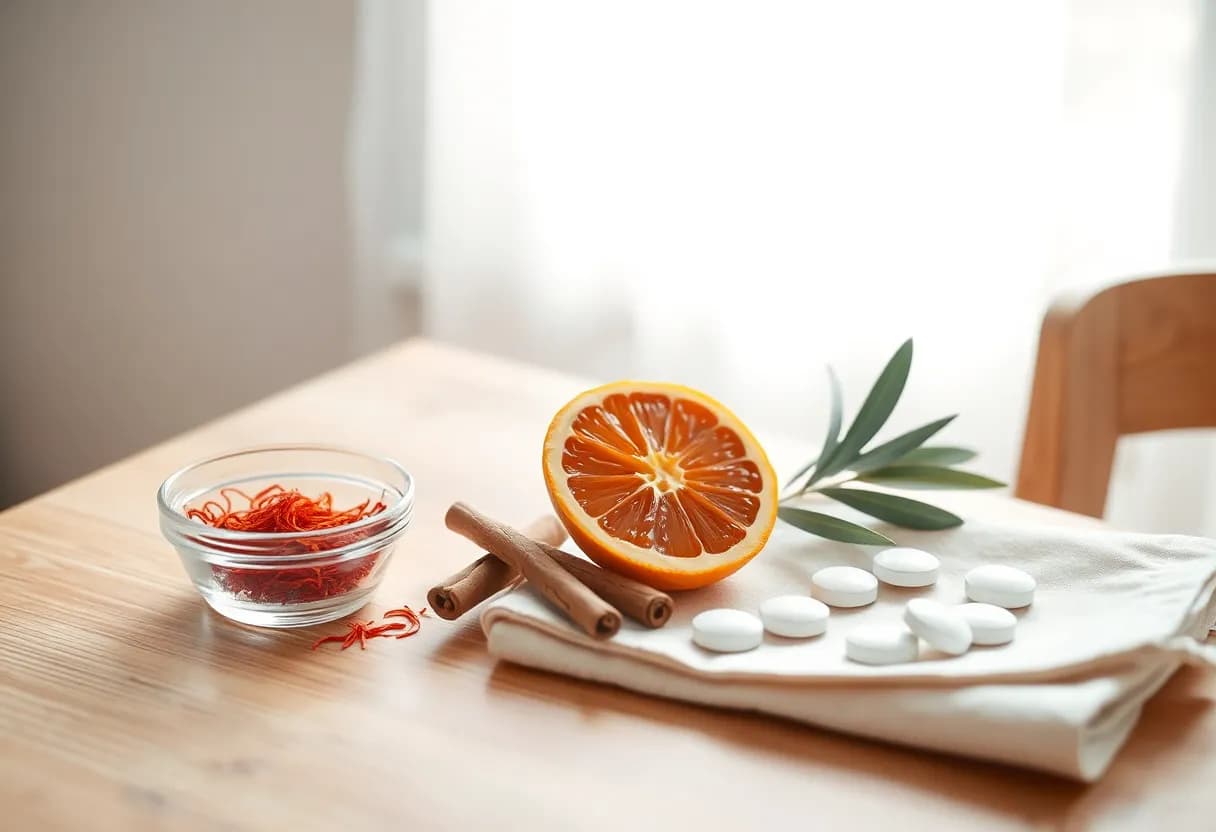
MemoVolt is a once-a-day tablet sold for memory, focus and brain fog, mainly to people over 55. Its sales page tells a specific story: microplastics build up in the brain, the brain loses its ability to use glucose, and neurons are left starving. The formula is pitched as a “dual defense” against both.
We have not tested MemoVolt, and we do not test any product on this site. What we did was read the official page, its refund policy and every study on its reference page, on 2 November 2026, and check the claims against the research. Here is what we found.
One thing to know first: we earn a commission on MemoVolt, and its affiliate program shares a contact address with other brain supplements on ClickBank, including NeuroZoom, which we also link to (ClickBank marketplace data, 2 November 2026). That is not proof of shared ownership, but you should know it.
What is in it
The official page lists ten ingredients in three groups. It does not publish the amount of any of them, and we could not find a supplement facts panel on the site.
“Microplastic Defense Matrix”: saffron extract, fucoxanthin and fucoidan (both from brown seaweed), and oleuropein from olive leaf.
“Brain Fuel Support Complex”: berberine HCl, Ceylon cinnamon bark, corosolic acid from banaba leaf, and kudzu flower extract.
“Neural Amplifier System”: Morosil, a branded extract of Sicilian Moro blood orange, which the page calls its hero ingredient, and xylitol, a sugar alcohol.
Read that list again without the group names, and four of the ten (berberine, cinnamon, corosolic acid and kudzu) are ingredients studied for blood sugar. Morosil is studied for weight. Only one, saffron, comes with a meta-analysis of human memory trials that we found. This is a metabolic formula with a memory label, and that is the most useful thing to know about it.
What the studies MemoVolt cites actually tested
MemoVolt's reference page links to eleven studies, one of them twice. We looked up all ten. Only one is a randomised trial in people, and it measured weight loss with Moro orange extract in overweight adults. None of the ten tested memory or cognition in humans.
Reviews, not trials: five are literature reviews, on berberine and silymarin, oleuropein, puerarin (the main compound in kudzu), and two on saffron.
Animal and cell studies: cinnamon extract in obese mice, xylitol in mice, a laboratory study of corosolic acid, and an immune-cell study on how macrophages clear damaged proteins.
The one human trial: Moro blood orange extract and weight loss in overweight but otherwise healthy men and women.
That is not unusual for this category, but it is worth saying plainly: the reference page supports the idea that these ingredients do things in the body. It does not support the idea that this formula improves anyone's memory.
The ingredients, one at a time
Saffron is the real one. In a 22-week trial of 54 adults over 55 with mild-to-moderate Alzheimer's disease, 30 mg of saffron a day performed about as well as the drug donepezil, and a 2020 meta-analysis of the small trials since found saffron improved cognitive scores compared with placebo. The trials are small and mostly from one country, but this is genuine human evidence. The catch: we cannot tell whether MemoVolt contains anything like 30 mg, because it does not say.
Berberine works, at doses this formula cannot be checked against. In a 2008 trial, berberine lowered blood sugar in people with type 2 diabetes about as much as metformin. The dose was 500 mg three times a day, 1,500 mg in all. Those trials were about diabetes, not memory, and without a published dose there is no way to know how much of that you would get here.
Cinnamon is modest at best. A 2013 meta-analysis found cinnamon lowered fasting blood sugar in type 2 diabetes but did not significantly change HbA1c, the longer-term measure doctors rely on. The study MemoVolt cites for cinnamon and brain insulin sensitivity was done in mice.
Corosolic acid and kudzu: the support MemoVolt cites for these is a laboratory study and a review. We found nothing on its reference page linking either to memory in people.
Fucoxanthin, fucoidan and oleuropein: the sales page makes strong claims for all three (crossing the blood-brain barrier, regrowing neural connections, clearing toxic proteins by “up to 40%”). The only support on its reference page is a review of oleuropein in chronic disease. We could not find a human memory trial for any of them there.
Morosil: a real, branded extract with a published human trial, for weight loss. The page also says it “enhances the bioavailability of every other ingredient”. We found nothing on the reference page that tests that.
Xylitol: a sweetener, common in chewable tablets. Its brain claim rests on a study in mice.
About the microplastics story
The premise is not invented. A 2025 study in Nature Medicine found microplastic and nanoplastic fragments in human brain tissue, at higher levels in samples from 2024 than from 2016, and higher still in people who had been diagnosed with dementia.
But that study found an association, not a cause, and it says nothing about removing plastic from the brain. No study on MemoVolt's reference page tests whether any of its ingredients reduce microplastics in people, and we know of none that does. The microplastics are real; the “defense” is a marketing frame placed around ingredients that were studied for other things.
Who should not take it
Price, refunds and the details on the order page
There is no single bottle. On 2 November 2026 the smallest order was two bottles at $79 each ($158). Three bottles cost $69 each ($207) and six cost $49 each ($294). Three ebooks are added as free bonuses.
The 60-day guarantee means returning everything. The refund policy asks you to send back all the items you received, in good condition, to a warehouse in Largo, Florida, within 60 days of delivery. You pay the return postage, and shipping fees are deducted from the refund. Buying six bottles to get the lowest price means six bottles to post back.
Tablet or capsule? The page describes MemoVolt as “easy-to-take tablets” and, in its FAQ, says to take “one capsule daily with food”. A small thing, but on a product that publishes no label, the details are all we have to go on.
Only buy it from the official site. Orders go through ClickBank from getmemovolt.com. Other sites that look official, including memovolt.shop, are affiliate pages like this one that forward you to the same checkout.
Our verdict
MemoVolt is mostly a blood-sugar supplement with one ingredient, saffron, that has real if limited evidence for memory. If the metabolic angle appeals to you, the honest version of that idea is that keeping blood sugar in check is good for the brain over decades. That is true, and it is something your doctor can measure. Whether this tablet helps with it is not something its makers have shown.
If you want to try it anyway, you are not taking a large risk as long as none of the warnings above apply to you: the ingredients are familiar and the guarantee is real, if fiddly. Just go in knowing what you are buying.
MemoVolt
Ten ingredients, most aimed at blood sugar, plus saffron. No published doses. From $49 a bottle on the six-bottle order, with a 60-day guarantee if you return everything.
See the official MemoVolt pageIn short
- Four of MemoVolt's ten ingredients are studied for blood sugar, one for weight, and saffron is the only one with a meta-analysis of human memory trials that we found.
- None of the ten studies on its reference page tested memory in people.
- No ingredient amounts are published, so nothing can be checked against the doses used in research.
- Berberine can lower blood sugar and interact with common prescription drugs: check with your doctor first.
- The smallest order is two bottles. Refunds require returning everything you received, at your own cost.
What we could not verify
Checked against the official page, its refund policy and its reference page on 2 November 2026. We could not verify the amount of any ingredient, the “over 71,000 customers” figure, the claims of certified handling and organic standards, or who manufactures the product. No certificate of analysis is published. The ingredient research described above is about the ingredients, not about MemoVolt; no trial of the finished formula exists that we could find.
Sources
- MemoVolt official page, ingredients and prices, read 2 November 2026.
- MemoVolt refund policy, read 2 November 2026.
- MemoVolt reference page, the ten studies it cites, read 2 November 2026.
- Briskey D, Malfa GA, Rao A. Effectiveness of “Moro” blood orange Citrus sinensis Osbeck standardized extract on weight loss in overweight but otherwise healthy men and women: a randomized double-blind placebo-controlled study. Nutrients, 2022.
- Akhondzadeh S, et al. A 22-week, multicenter, randomized, double-blind controlled trial of Crocus sativus in the treatment of mild-to-moderate Alzheimer's disease. Psychopharmacology, 2010.
- Ayati Z, Yang G, Ayati MH, Emami SA, Chang D. Saffron for mild cognitive impairment and dementia: a systematic review and meta-analysis of randomised clinical trials. BMC Complementary Medicine and Therapies, 2020.
- Yin J, Xing H, Ye J. Efficacy of berberine in patients with type 2 diabetes mellitus. Metabolism, 2008.
- Guo Y, Chen Y, Tan ZR, Klaassen CD, Zhou HH. Repeated administration of berberine inhibits cytochromes P450 in humans. European Journal of Clinical Pharmacology, 2012.
- Allen RW, Schwartzman E, Baker WL, Coleman CI, Phung OJ. Cinnamon use in type 2 diabetes: an updated systematic review and meta-analysis. Annals of Family Medicine, 2013.
- Nihart AJ, et al. Bioaccumulation of microplastics in decedent human brains. Nature Medicine, 2025.
This article may contain affiliate links. If you buy through them we may earn a commission at no extra cost to you. Nothing here is medical advice; talk to your doctor before starting any supplement.